

England needs to cut water demand while also preparing for worsening flood risk. Integrated water management can tackle both. Research by the University of Manchester within the Enabling Water Smart Communities (EWSC) project shows that whether it succeeds depends as much on people as on pipes: on everyday water practices, on trust, and on the many people involved in delivering and maintaining water infrastructures.
The 5,000 Megalitre problem
England faces a public water supply deficit of around 5,000 megalitres a day by 2055, roughly a third of current supply.1 Meanwhile, half of the 1.5 million homes planned by 2029 are earmarked for regions already classed as seriously water stressed.
But scarcity is only half the problem. Hotter, drier summers now sit alongside warmer, wetter winters. One in thirteen homes built in England over the past decade sits in the highest-risk flood zone, and 59% of people living in recently built homes believe their home is at risk of flooding.2 New housing needs to be ready for increasing variability and extremity across both sets of risks.
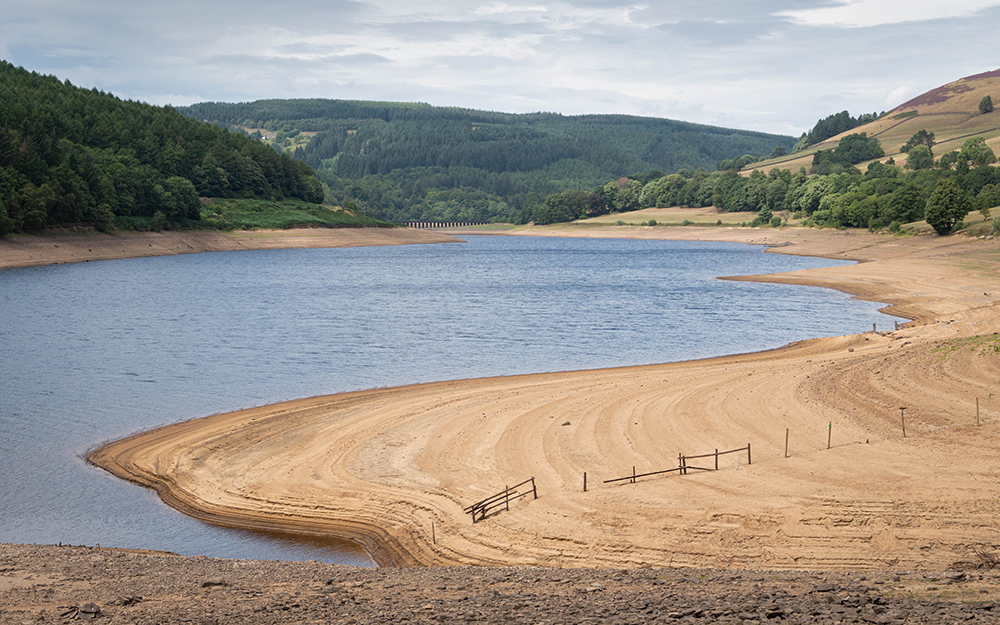
Designing for both extremes
Integrated water management treats drought, flooding, and pollution as connected problems rather than separate ones. It includes options such as community-scale water reuse – recirculating rainwater or greywater for non-potable applications including flushing toilets or washing laundry – to cut demand on the mains while easing the load on sewers. Sustainable drainage slows stormwater in a downpour and, combined with rainwater harvesting, can supply non-drinking water in a dry spell. Designed into new developments from the outset, these options make homes and neighbourhoods more resilient to both extremes.
Enabling Water Smart Communities (EWSC),3 an Anglian Water-led project funded through Ofwat’s Innovation Fund, set out to understand how such solutions can be delivered. Within it, University of Manchester researchers examined how integrated systems depend on people and their practices: both the households who live with water infrastructures, and the professionals who design, build, and maintain them.
Support is high, varied and conditional
University of Manchester research shows public support for transforming water systems is generally high, though people’s perspectives vary on the nature of the problems faced, and how they should be resolved.4 Polling studies show that more than 90% of people would use either rainwater and greywater within their homes, for functions like toilet flushing or laundry.5
These options form part of broader palette of possibilities to deliver solutions to what the public see as failings in UK housing, from flooding and water scarcity to loneliness (including general social disconnectedness and a lack of local third places for communities), affordability, and biodiversity loss. Other options include community gardens and blue infrastructures, sustainable drainage at building and development scale, and advanced water efficiency measures like recirculating showers and laundry machines.
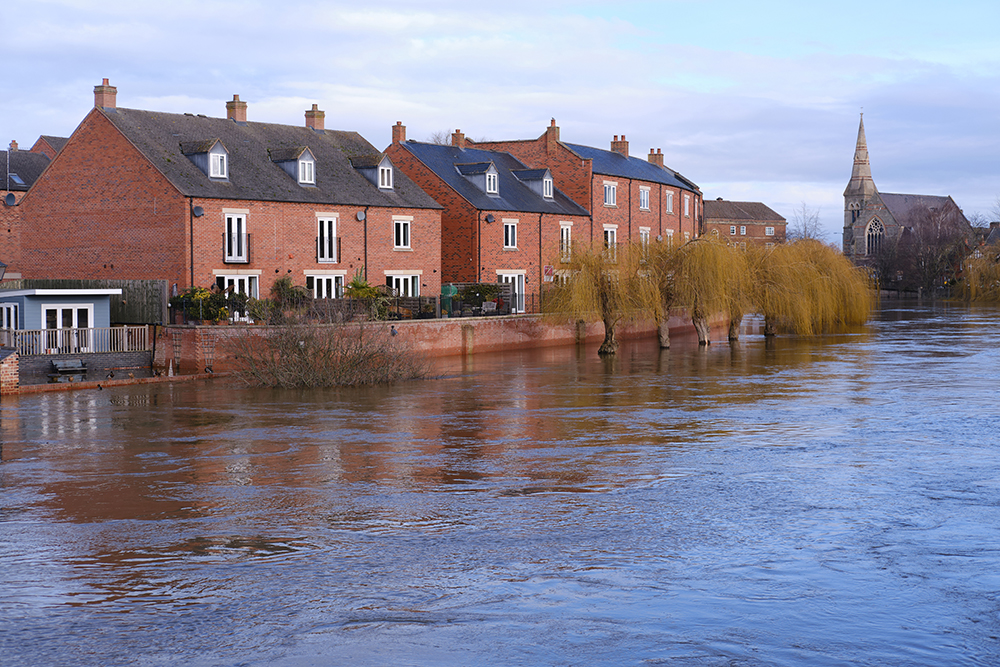
Public perspectives differ on the priorities for water smart communities: there are contrasting views on whether they should focus on increasing local resilience and self-sufficiency, minimise a development’s environmental footprint, act as a testbed for new technologies, or focus on community cohesion. There are similarly diverse views on responsibility, too: some people prefer expert-led solutions, while others want greater community involvement (though formal participation in decision-making was consistently a low priority).4
People care about water, and want to see water managed more effectively. However, their support to adopt or participate in novel solutions is conditional on there being clear responsibilities, fair costs, skilled people, and systems to ensure transparency and accountability in case of problems. Similarly, how people interact with water depends on their histories, memories, and cultures. It depends on the material environment around them, and on their routines and responsibilities. All of this affects the demands different people place on water infrastructure, what they understand to be the problems with existing arrangements, and how they imagine the solutions to look and be delivered.6
Many roles, many points of potential failure
Guiding integrated water management projects through from the initial vision through planning, to delivery, operation and maintenance involves a long chain of skills.7 Master planners develop the vision for a new development, which can determine what options for integrated water management are considered from the outset. Land buyers and planners decide what is possible on a site, and planning officers and consultants assess whether proposals will work. Architects, engineers, and designers shape how water moves through homes and streets. Developers, contractors and plumbers build and install the systems, and building inspectors check them. Sales teams need to explain them to buyers. Water companies, local authorities or management companies adopt and run them, while plumbers, gardeners and residents keep them working day to day.8 A gap anywhere in that chain can undo the rest.
The weak points seldom lie in the technologies themselves itself. Instead, the success of water smart communities lies in effective installation, ownership, maintenance and use. Without clear responsibilities, even novel water systems risk becoming expensive, unused infrastructural relics,8 or ripped out and replaced with less water-sensitive options: a soakaway garden paved over for a driveway, or greywater system taken offline without anyone being impacted. Professionals have reported skills gaps in SuDS delivery, planning and plumbing, and limited water literacy outside the water sector4. Moving integrated water management from novel to normal will take upskilling from plumbers to planners, and collaboration between the many institutions involved in housing development.8

Tackling the drivers of demand
Integrated systems also need to keep pace with how demand for water, drainage and sewerage changes. Conventional approaches assume people make deliberate, economically minded decisions about water use. However, practice-based research shows that much water use is habitual, shaped by the homes, technologies and social norms around us.9 People rarely value water for its own sake, but for the services it provides: comfort, cleanliness, freshness and wellbeing. A review by Cahill, Hoolohan and Browne shows that these routines shift with infrastructure and wider social change, which is why behaviour-change approaches aimed at individuals have limited reach.9
Much of that change is instead driven by policy far from the water sector. Housing, energy, health and economic policies all affect household water use.2 Demand for digital products and data centres increases demand in already water-scarce regions.10 NHS “care in the community” moves water-intensive care into homes. Flexible working shifts demand into homes and across the day: during the May 2020 lockdown, peak household consumption ran 35% above pre-lockdown levels.2 Few of these impacts are acknowledged, let alone monitored, in the policies that create them. Integrated water management needs joined-up policy that anticipates these societal changes, rather than discovering them at the meter.
From novel to normal
Integrated water management offers a response to both drought and flood. But these solutions are not only engineered; they are lived. Normalising them means designing for diverse practices and priorities, building trust through clear ownership and accountability, investing in skills along the whole delivery chain, and joining up policy well beyond the water sector.
Enabling Water Smart Communities demonstrates the need for ambitious, long-term thinking to anticipate changes in society, economy and the climate, and the variety and depth of collaborations needed to deliver housing that contributes to sustainability objectives.
If you want to learn more about the research, take a look at the one-pager on ‘Making Community Central to Water Smart Communities’. For a more in-depth understanding, read the University of Manchester’s report on ‘A people-centred perspective on enabling water smart communities’. To keep in touch with EWSC, and sign up to be part of our ongoing ‘Community of Practice’.
References
- Environment Agency (2025) National Framework for Water Resources 2025: water for growth, nature and a resilient future. https://www.gov.uk/government/publications/national-framework-for-water-resources-2025-water-for-growth-nature-and-a-resilient-future
- Aviva (2024) One in thirteen new homes built in flood zone. https://www.aviva.com/newsroom/news-releases/2024/01/one-in-thirteen-new-homes-built-in-flood-zone/
- Enabling Water Smart Communities https://www.ewsc.org.uk/
- Foggitt, E., Hoolohan, C. & Browne, A. (2026) Social perspectives on alternative water systems for new housing: a Q methodology study. Sustainability: Science, Practice and Policy 22(1). https://doi.org/10.1080/15487733.2026.2730002
- Public First (2025) The case for water smart housing. Report for Enabling Water Smart Communities. https://www.ewsc.org.uk/project-reports/the-case-for-water-smart-housing
- Hoolohan, C., Foggitt, E. & Browne, A. (2025) A people-centred perspective on Enabling Water Smart Communities. University of Manchester. https://research.manchester.ac.uk/en/publications/a-people-centred-perspective-on-enabling-water-smart-communities-/
- Hoolohan, C., Browne, A. & Foggitt, E. (2025) Water reuse for sustainable practices in new housing infrastructure. Policy@Manchester. https://blog.policy.manchester.ac.uk/posts/2025/02/water-reuse-for-sustainable-practices-in-new-housing-infrastructure
- Foggitt, E., Hoolohan, C. & Browne, A. (2025) Sustainable water systems and practices for new housing: shifting from ‘novel’ to ‘normal’. EWSC Insights, Medium. https://medium.com/ewsc/sustainable-water-systems-and-practices-for-new-housing-ewsc-insights-4b3807a0160c
- Cahill, J., Hoolohan, C. & Browne, A. (2024) Social practice theory and household water demand: a review of literature and research evidence. WIREs Water 11(3): e1719. https://doi.org/10.1002/wat2.1719
- Hoolohan, C., Immel-Parkinson, L., Foggitt, E. & Browne, A. (2026) Tracing invisible policy impacts on water demand. Research Square preprint. https://doi.org/10.21203/rs.3.rs-8700096/v1
Header image: © Jakob Fischer via Adobe Stock
