

The construction of large hydropower infrastructures has become a cornerstone of global climate mitigation strategies. As nations pursue climate-neutral economies, hydropower is often seen as a reliable renewable energy source capable of delivering large-scale, low-carbon electricity.
According to the International Energy Agency’s (IEA) Net Zero by 2050 report, the world will need 2,600 GW of hydropower capacity by mid-century to keep global temperature rise below 1.5°C.1 Achieving this target would require building as much new capacity in the next 30 years as humanity has constructed over the past century.2
This ambition has fuelled an unprecedented boom in dam construction – especially across the Global South. Between 2018 and 2023, global hydropower capacity grew by an average of 24.5 GW per year. In 2024 alone, new installations reached an estimated 15.1 GW, bringing total global capacity to 1,253 GW, making hydropower the largest source of renewable electricity, supplying 14.3% of global power.3,4
Looking ahead, the IEA projects that between 2025 and 2030, new hydropower plants will add 21–35 GW annually, with nearly 90% of this growth occurring in emerging and developing economies – particularly in China, Southeast Asia, Sub-Saharan Africa and India. Hydropower generation could rise by around 7% as these projects come online, most of them large- or mega-scale developments and will account for 30% of global renewable electricity generation in 2030.5
Yet this rapid expansion is not without controversy. While hydropower remains central to many decarbonization strategies, concerns are growing over its environmental impacts, vulnerability to climate change, and the often-unjust decision-making processes behind large dam projects.
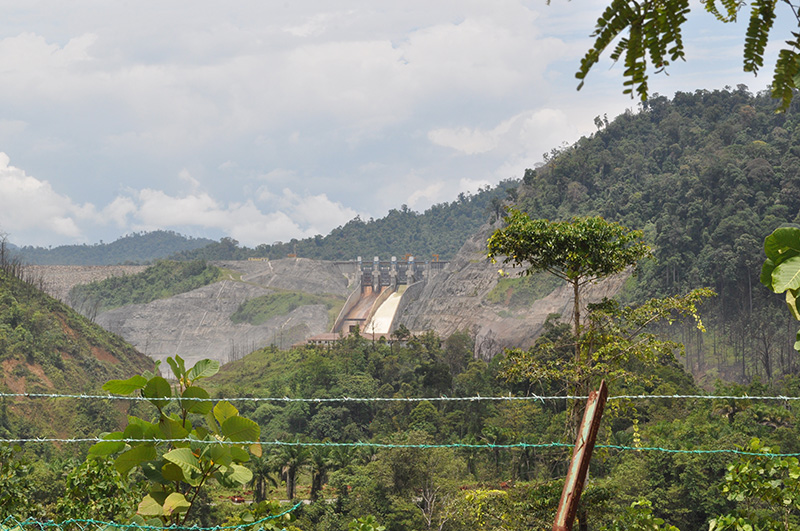
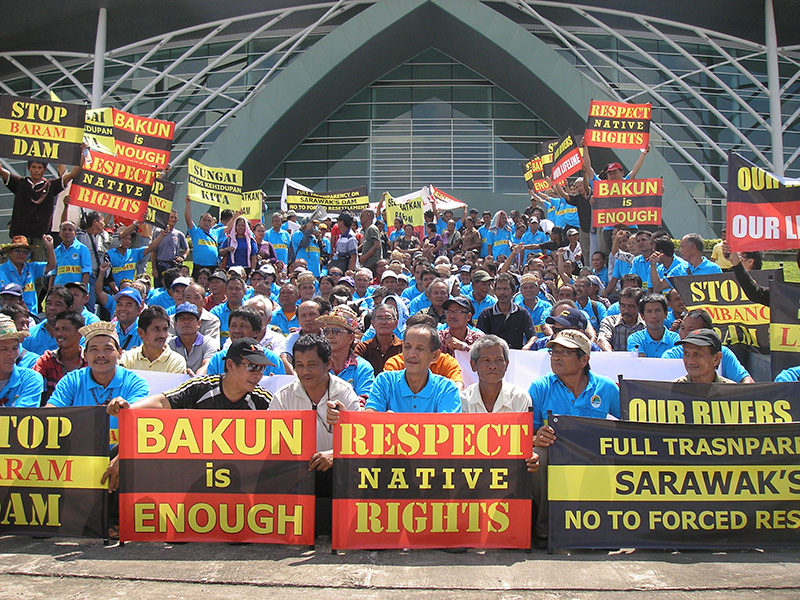
Across the world, thousands of socio-environmental conflicts have emerged around hydropower development. Communities, Indigenous Peoples, and environmental movements are mobilising to defend their territories, protect ecosystems, and challenge top-down governance models in both the Global North and the Global South.6,7 Examples include the anti–large dam “new water culture” movement in Spain and the large-scale, non-violent protests by tribal communities, farmers, environmentalists, and human rights activists against the Sardar Sarovar Project (SSP) on the Narmada River in India.8 In some cases, such mobilisations have led to positive outcomes — for instance, the Baram mega dam project in Sarawak, Borneo (Malaysia) was halted after several years of Indigenous Peoples’ protests and blockades against its construction.9
Despite mounting criticism, large-scale hydropower projects continue to advance. For example, China has begun constructing the Medog Hydropower Station on the Yarlung Tsangpo River in Tibet, which is set to become the world’s largest hydropower facility at 60,000 MW, surpassing even the Three Gorges Dam in China’s Hubei province. The project has already drawn opposition from environmental groups and regional stakeholders due to its potential ecological, social, and geopolitical impacts. These include the mass displacement of local communities, threats to religious and cultural heritage, and risks to the rich biodiversity of the Tibetan valleys. Concerns have also been raised about China’s increased control over the transboundary Yarlung Tsangpo River, which flows into India’s Arunachal Pradesh and Assam states and then into Bangladesh,10,11 potentially affecting the livelihoods of millions of people downstream. Meanwhile, the World Bank has approved a plan to serve as the lead financier for the long-delayed and contested Rogun Mega Dam in Tajikistan, while also negotiating financing agreements for the Inga 3 Mega Dam in the Democratic Republic of Congo and one of Nepal’s largest projects, the Upper Arun Dam on the Arun River.12
Large dams and climate change mitigation
While hydropower is often regarded as a key component of global decarbonisation strategies, the climate benefits of large dams are increasingly being questioned. Large reservoirs – particularly in tropical regions – can emit significant amounts of methane and carbon dioxide as submerged vegetation decomposes. Emissions also result from dam construction and the long-term accumulation of greenhouse gases.13-15
It is therefore essential to distinguish between large dams with reservoirs and small run-of-river hydropower, micro-hydropower and in-stream turbine systems without reservoirs. These plants tend to have minimal emissions, as they require much less construction material per unit of energy, and they don’t produce GHG emissions from flooded decaying biomass and far smaller ecological impacts, such as from deforestation.16 Hydropower’s “clean” label should therefore be assessed case by case, taking into account local conditions, dam size, and reservoir type.
Socio-environmental implications
Beyond climate concerns, large dams pose significant social and environmental challenges. Hydropower development can disrupt aquatic ecosystems, harm wildlife, flood forests, and displace thousands of people, leading to biodiversity loss and long-term economic hardship.17
These projects also raise crucial justice questions – both in how burdens and benefits are distributed (distributional justice) and in how decisions are made (procedural justice).18 Too often, local communities and Indigenous peoples bear the heaviest burdens while receiving few of the benefits. For example, in the case of the Kamchay Dam in Cambodia, most of the electricity generated is supplied to the capital, Phnom Penh, while many affected local residents remain without access to electricity. At the same time, they face restricted access to natural resources such as forest products and fish, with adverse impacts on their livelihoods.19 As a result, opposition to large hydropower projects has intensified. Civil society organisations, environmental movements, and grassroots networks are calling for energy democracy – greater participation in decision-making, recognition of local knowledge, and a fairer distribution of the benefits of energy transitions.6,20-22
Hydropower and climate vulnerability
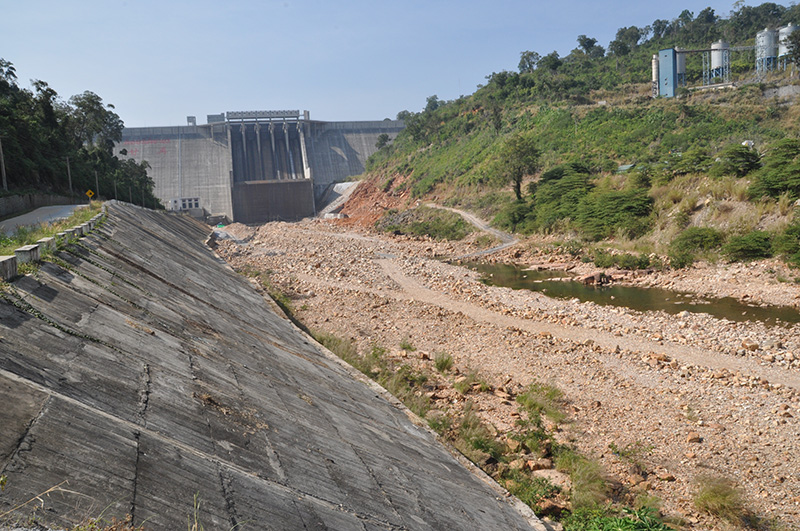
Hydropower is a substantial part of many countries’ renewable energy strategies, but its future reliability is increasingly uncertain as climate change accelerates. Extreme weather events, droughts, temperature shifts, and rainfall variability can disrupt water availability, reduce electricity generation, and damage infrastructure.23
Africa is particularly vulnerable. Many countries – such as the Democratic Republic of Congo, Ethiopia, Malawi, Mozambique, Uganda, and Zambia, depend heavily on hydropower as the share of hydropower in electricity generation in these countries exceeds 80%. Climate projections indicate worsening droughts and rainfall variability across southern and eastern Africa, threatening energy security. Over the remainder of the century, climate impacts could cut cumulative hydropower output across the continent by an amount equivalent to its current annual production.24,25
Similar vulnerabilities exist in Latin America, Asia, and the Middle East, where shifting precipitation patterns, melting glaciers, and extreme floods could drastically affect hydropower capacity.26-29 Beyond reduced output, extreme weather events also increase the risk of dam failures, with devastating consequences for downstream communities and the environment,30-32 including reported cases of deaths, mass evacuation of the population, loss of large tracts of farmland and loss of thousands of houses.33-37
Towards a justice-centred hydropower future
A genuinely just hydropower future requires locally grounded solutions that consider social and environmental risk, climate vulnerability, and climate mitigation. It demands respect for human rights and Free, Prior, and Informed Consent (FPIC) from Indigenous and local communities, along with meaningful participation in energy planning and governance.38,39
Equity also means ensuring that local cultures and knowledge are respected, and that communities retain sovereignty over their energy choices. The San José Declaration on Sustainable Hydropower40 called for genuine engagement with all project-affected communities, including indigenous peoples, and for improving livelihoods relative to pre-project conditions.
While large-scale hydropower projects could offer substantial energy capacity, their appropriateness for delivering sustainable and just energy transitions is contestable. In many contexts, community-managed micro-hydropower and in-stream turbines without reservoirs may provide more equitable and environmentally responsible pathways toward a cleaner and fairer energy transition. For example, in the Dominican Republic, 45 community-run micro-hydropower systems were developed over 16 years, supplying electricity to remote areas and cutting emissions by more than 28,000 tonnes of CO₂ per year through avoided emissions and increased carbon sequestration.41 Similar successful examples of community-managed micro-hydropower delivering sustainable and inclusive energy solutions can also be found in Japan, Indonesia, and Pakistan.42-44
FWR Analysis Articles are designed to provide a view on topical issues across the water sector. This is an opinion article and does not necessarily reflect the views of the FWR, IES or the author’s current or past affiliated organisations.
References
1 IEA, (2021). Net Zero by 2050. A Roadmap for the Global Energy Sector. Available at: https://iea.blob.core.windows.net/assets/4719e321-6d3d-41a2-bd6b-461ad2f850a8/NetZeroby2050-ARoadmapfortheGlobalEnergySector.pdf
2 IHA, (2021). 2021 Hydropower Status report. Available at: https://www.hydropower.org/publications/2021-hydropower-status-report
3 REN21 (2025). Global Status Report. Hydropower. https://www.ren21.net/gsr-2025/technologies/hydro-power/
4 IHA (2025). World Hydropower Outlook 2025. https://www.hydropower.org/publications/2025-world-hydropower-outlook
5 IEA (2025). Renewables 2025. Analysis and forecasts to 2030. https://www.iea.org/reports/renewables-2025
6 Del Bene D., Scheidel A., Temper L. (2018). More dams, more violence? A global analysis on resistances and repression around conflictive dams through co-produced knowledge. Sustain Sci 2018, 13:617-633 https://doi.org/10.1007/s11625-018-0558-1
7 Hidalgo-Bastidas, J. P. (2023). “Understanding Anti-Dam Resistance Politics: A Historical and Territorial Study of Two Megadams in Coastal Ecuador” Water. https://doi.org/10.3390/w15234132
8 Shah, E. et al (2019). Environmental justice movements in globalising networks: a critical discussion on social resistance against large dams. The Journal of Peasant Studies. https://doi.org/10.1080/03066150.2019.1669566
9 Mongabay (2016). Controversial dam officially canceled in Borneo after indigenous protests. https://news.mongabay.com/2016/03/controversial-dam-officially-canceled-in-borneo-after-indigenous-protests/
10 ISDP (2025). ‘Building on Tofu’: Medog Another Project Damming Tibet’s environment. https://www.isdp.eu/building-on-tofu-medog-another-project-damming-tibets-environment/
11 Wong, T. (2025). China begins building world’s largest dam, fuelling fears in India. https://www.bbc.com/news/articles/c4gk1251w14o
12 Leslie, J., (2024). In a Major Reversal, the World Bank Is Backing Mega Dams. YaleEnvironment360. https://e360.yale.edu/features/world-bank-hydro-dams
13 Fearnside, P., Pueyo, S. (2012) Greenhouse-gas emissions from tropical dams. Nature Clim Change 2, 382–384. https://doi.org/10.1038/nclimate1540
14 Deemer R. B. et al (2016). Greenhouse Gas Emissions from Reservoir Water Surfaces: A New Global Synthesis, BioScience. https://doi.org/10.1093/biosci/biw117
15 Almeida, R.M et al. (2019). Reducing greenhouse gas emissions of Amazon hydropower with strategic dam planning. Nature Communications. https://doi.org/10.1038/s41467-019-12179-5
16 Varun, Bhat I.K., Prakashb R. (2009). LCA of renewable energy for electricity generation systems—A review. Renewable and Sustainable Energy Reviews, 13:5, 1067-1073.
https://doi.org/10.1016/j.rser.2008.08.004
17 WCD (2000). Dams and development. Anew Framework for decision making. The report of the World Commission on Dams. https://archive.internationalrivers.org/sites/default/files/attached-files/world_commission_on_dams_final_report.pdf
18 Siciliano G., Urban F., Tan-Mullins M., Mohan G. (2018). Large dams, energy justice and the divergence between international, national and local developmental needs and priorities in the global South. Energy Res Social Sci, 41:199-209. https://doi.org/10.1016/j.erss.2018.03.029
19 Siciliano G., Urban F., Tan-Mullins M., Pitchdara L., Kim S. (2016). The Political Ecology of Chinese Large Dams in Cambodia: Implications, Challenges and Lessons Learnt from the Kamchay Dam. Water, 8(9), 405. https://doi.org/10.3390/w8090405
20 Siciliano G., Del Bene D., Scheidel A., Liu J., Urban F. (2019). Environmental justice and Chinese dam building in the global South. Current Opinion in Environmental Sustainability, (37), 20-27.
https://doi.org/10.1016/j.cosust.2019.04.003
21 Temper L., Avila S., Del Bene D., Gobby J., Kosoy N., Le Billon P., Martinez-Alie J., Perkins P., Roy B., Scheidel A., Walter M. (2020). Movements shaping climate futures: A systematic mapping of protests against fossil fuel and low-carbon energy projects. Environmental Research Letters, 15, 123004
10.1088/1748-9326/abc197
22 Szulecki K., Overland I. (2020). Energy democracy as a process, an outcome and a goal: A conceptual review. Energy research and Social Science, 69, 101768.
https://doi.org/10.1016/j.erss.2020.101768
23 Siciliano G. (2023). Hydropower, climate change and sustainable energy transitions. In: Urban F., Nordensvärd J., eds. Handbook on Climate Change and Technology, Edward Elgar, pp.82-101. https://www.elgaronline.com/edcollchap/book/9781800882119/chapter5.xml
24 IEA (2020). Climate impacts on African hydropower. https://www.iea.org/reports/climate-impacts-on-african-hydropower
25 IPCC (2021). Sixth Assessment Report: Regional fact sheet – Africa. https://www.ipcc.ch/report/ar6/wg1/downloads/factsheets/IPCC_AR6_WGI_Regional_Fact_Sheet_Africa.pdf
26 IEA (2021). Climate Impacts on Latin America hydropower. https://www.iea.org/reports/climate-impacts-on-latin-american-hydropower
27 Goodarzi M. R. et al (2020). The impact of climate change on water and energy security, Water Supply, IWA Publishing. https://wefnexus.tamu.edu/files/2021/01/Goodarzi_etal_ImpactofClimateChange_2020.pdf
28 Qin P., Xu H., Liu M., Du L., Xiao C., Liu L., Tarroja B. (2020). Climate change impacts on Three Gorges Reservoir impoundment and hydropower generation, Journal of Hydrology, 580, 123922
https://doi.org/10.1016/j.jhydrol.2019.123922
29 Mishra S. K., Veselka T. D., Prusevich A. A., Grogan D. S., Lammers R. B., Rounce D. R., Ali S. H., Christian M. H. (2020). Differential Impact of Climate Change on the Hydropower Economics of Two River Basins in High Mountain Asia, Front. Environ. Sci., 13.
30 Fluixá-Sanmartín J., Morales-Torres A., Escuder-Bueno I., Paredes-Arquiola J. (2019). Quantification of climate change impact on dam failure risk under hydrological scenarios: a case study from a Spanish dam, Nat. Hazards Earth Syst. Sci. Discuss., https://doi.org/10.5194/nhess-2019-141
31 Sinclair P. (2020). Michigan dam break shows how climate change strains infrastructure, Yale Climate connections. https://yaleclimateconnections.org/2020/06/michigan-dam-break-shows-how-climate-change-strains-infrastructure/
32 Petley D. (2021). Himalayan dam collapse should be a wakeup call for everyone over climate change risks, New Civil Engineer. https://www.newcivilengineer.com/latest/himalayan-dam-collapse-should-be-a-wake-up-call-for-everyone-over-climate-change-risks-16-02-2021/
33 Global Times (2021). Two dams in Inner Mongolia collapse after heavy rain. https://www.globaltimes.cn/page/202107/1229047.shtml
34 Alarabiya News (2020). Dam collapse due to heavy rains destroys hundreds of homes in Sudan. https://english.alarabiya.net/News/middle-east/2020/08/02/Dam-collapse-due-to-heavy-rains-destroys-hundreds-of-homes-in-Sudan
35 Khmer Times (2020). Dam damaged due to heavy rainfall. https://www.khmertimeskh.com/50773322/dam-damaged-due-to-heavy-rainfall/
36 Vietnam News (2025). Northern Vietnam hydropower dam collapse causes $1.9mn in damage. https://news.tuoitre.vn/northern-vietnam-hydropower-dam-collapse-causes-19mn-in-damage-103251008122021914.htm
37 BBC News (2018). Laos dam collapse: Many feared dead as floods hit villages. https://www.bbc.co.uk/news/world-asia-44935495
38 Siciliano G., Wallbott L., Lederer M., Nguyen D. A. (2021). Low-carbon energy, sustainable development and justice: towards a just energy transition for the society and the environment, Sustainable Development, 1-13
https://doi.org/10.1002/sd.2193
39 IHA (2020). Gaining Indigenous Peoples’ consent for sustainable hydropower. https://www.hydropower.org/news/gaining-indigenous-peoples-e2-80-99-consent-for-sustainable-hydropower-c2-a0
40 World Hydropower Congress (2021). San José Declaration on Sustainable Hydropower. Available at: https://www.hydropower.org/publications/san-jose-declaration-on-sustainable-hydropower
41 Sánchez, A. & Izzo, M. (2017). Micro hydropower: an alternative for climate change mitigation, adaptation, and development of marginalized local communities in Hispaniola Island. Clim Change 140, 79–87 (2017).
https://doi.org/10.1007/s10584-016-1865-0
42 Fujimoto, T., and Kazuki K. (2019). Community-Led Micro-Hydropower Development and Landcare: A Case Study of Networking Activities of Local Residents and Farmers in the Gokase Township (Japan). Energies 12, no. 6: 1033. https://doi.org/10.3390/en12061033
43 Rospriandana N., Burke P J., Suryani A., Husni Mubaros M., Pangestu M, A. (2023). Over a century of small hydropower projects in Indonesia: a historical review. Energy, Sustainability and Society. 13:30 https://doi.org/10.1186/s13705-023-00408-1
44 Khan, M. A., Yousuf, N., & Bashawri, Y. M. (2024). The Impact of Community-Based Micro-Hydroelectric Plants on Sustainable Development in the Gilgit–Baltistan Region of Pakistan. The Journal of Environment & Development, 34(3), 553-578. https://doi.org/10.1177/10704965241305841
Featured Header Image: Bui Dam Reservoir, Ghana, submerged area © Giuseppina Siciliano
